

Blogs
Paint Brush Types for Beginners: Which 5 Brushes Do You Really Need?

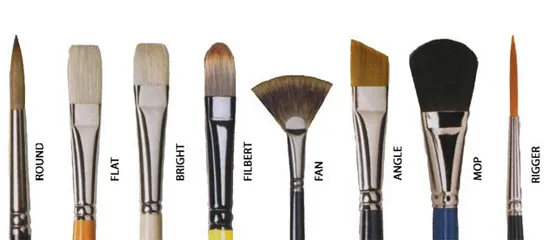
Beginners only need four or five well-chosen paint brushes to start painting with acrylics or watercolors. A round brush, flat brush, filbert brush, fine detail brush, and optional fan brush can handle most basic techniques, from broad strokes to fine lines and textures.
Understanding paint brush types for beginners helps you avoid spending money on large sets filled with brushes you may never use. Whether you’re buying supplies for school art classes, university projects, or painting at home in Pakistan, start by choosing brushes that match your painting medium and the techniques you want to learn.
A small, good-quality brush set is often more useful than a large collection of poorly made brushes.
5 Paint Brush Types for Beginners: Your Essential Starter Set
Paint brushes come in different shapes because each shape creates a different kind of mark. Some cover large areas quickly, while others help you paint fine details or softer edges.
Here are five brushes worth considering first.
1. Round Brush: Your Most Versatile Painting Tool
A round brush has a rounded body that narrows toward a pointed tip. It can create thin lines, medium-width strokes, and small details depending on the pressure you apply.
Best for: Outlining, curved shapes, flowers, leaves, and general painting.
Round brushes are especially useful for watercolor because a good brush can hold water and release paint gradually. They also work well with acrylics when made with suitable bristles.
For a beginner’s kit, a round brush in size 6 or 8 is a practical starting point.
Try painting a leaf by pressing the brush gently against the paper and lifting it toward the tip. This simple exercise demonstrates how one brush can create different line widths.
2. Flat Brush: Best for Backgrounds and Straight Edges
Flat brushes have bristles arranged into a rectangular shape with a straight edge. They spread paint across wider surfaces and help create clean, controlled strokes.
Best for: Backgrounds, broad strokes, straight lines, and geometric shapes.
Acrylic beginners often use flat brushes for covering canvas areas with color. Watercolor students can use them for washes and rectangular shapes when the brush has adequate water capacity.
A flat brush around ½ inch wide is a useful addition to a starter set.
For example, a student painting a landscape can use a flat brush to cover the sky before adding smaller details with a round brush.
3. Filbert Brush: Best for Smooth, Rounded Strokes
A filbert brush looks similar to a flat brush but has a rounded, oval-shaped tip.
Best for: Flower petals, clouds, rounded objects, and soft transitions.
Its shape makes it useful for painting curved forms and blending edges without leaving the sharp rectangular marks associated with flat brushes. Filbert brushes are particularly popular in acrylic painting because they can spread and blend paint over moderate areas.
A size 6 or 8 filbert is suitable for many beginner exercises.
If you’re painting flowers for a school art project, a filbert brush can create rounded petals with fewer individual strokes.
4. Detail Brush: Best for Fine Lines and Small Features
A detail brush has a small, narrow tip designed for painting tiny areas.
Best for: Fine outlines, lettering, facial features, small patterns, and finishing touches.
For beginners, a size 0 or 1 detail brush is generally sufficient. Brush numbering is not standardized across brands, so check the actual tip rather than relying entirely on the number.
Detail brushes are useful when decorating handmade cards, painting small illustrations, or adding fine features to a canvas painting.
Avoid pressing too hard. Excessive pressure spreads the bristles and makes thin lines difficult to control.
5. Fan Brush: Best for Special Textures
A fan brush has thin bristles spread outward into a fan shape.
Best for: Grass, foliage, fur effects, and selected blending techniques.
It is commonly used to create light textures and repeated marks that would take longer with a pointed brush.
For example, an acrylic painting of a grassy field can be developed with gentle upward taps using a fan brush.
However, a fan brush is optional for complete beginners. If your budget is limited, buy a round, flat, filbert, and detail brush first.
Paint Brush Shape Comparison: Which Brush Does What?
Use this quick chart when choosing brushes for a school assignment, beginner art class, or personal painting project.
| Brush type | Shape | Main use | Suggested starter size |
| Round | Pointed tip | Lines, curves, general painting | 6 or 8 |
| Flat | Straight rectangular tip | Backgrounds, broad strokes | ½ inch |
| Filbert | Rounded oval tip | Petals, curved shapes, blending | 6 or 8 |
| Detail | Fine pointed tip | Small features, thin lines | 0 or 1 |
| Fan | Spread-out bristles | Grass, foliage, textures | Small or medium |
These sizes are only starting suggestions. Manufacturers may use different numbering systems, and larger artwork generally requires larger brushes.
Synthetic vs Natural Bristles: Which Is Better for Beginners?
One of the most important buying decisions is choosing the right bristle material.
Synthetic brushes are made from manufactured fibers such as nylon or polyester. Natural-bristle brushes use animal hair or bristles, with performance varying according to the material.
| Feature | Synthetic brushes | Natural-hair brushes |
| Price | Usually more affordable | Can be more expensive |
| Acrylic painting | Often a practical choice | Some types may be less suitable |
| Watercolor painting | Good options available | Some hold large amounts of water |
| Durability | Depends on fiber quality and construction | Depends on hair type and care |
| Maintenance | Generally straightforward | May require more careful handling |
| Beginner suitability | Excellent starting option | Optional depending on budget |
Which Should You Choose?
For acrylic painting, start with synthetic brushes designed to maintain their shape when handling thicker paint.
For watercolor, soft synthetic brushes are a sensible beginner option, particularly if they hold water well and return to a fine point.
Natural-hair watercolor brushes can offer excellent water capacity, but beginners do not need to purchase expensive animal-hair brushes to learn basic techniques.
If you’re still deciding which painting medium to learn, read our guide on acrylic paint vs watercolor for beginners before choosing your brush set.
How to Choose a Beginner Paint Brush Set in Pakistan
Paint brushes are available individually and in sets across Pakistani stationery and art supply shops.
A large set may look attractive, but the number of brushes tells you little about their quality.
When shopping, check these features:
- Bristle shape: The bristles should be evenly arranged without obvious gaps.
- Ferrule: The metal section connecting the bristles to the handle should feel secure.
- Handle comfort: The brush should feel balanced and easy to control.
- Bristle flexibility: The bristles should bend appropriately for the intended medium and recover their shape.
- Set variety: Choose different brush shapes instead of buying several brushes that perform the same task.
Budget vs Premium Paint Brushes
For students buying their first art materials, a basic synthetic set may be sufficient for practice.
| Buying option | Best for | What to prioritize |
| Budget synthetic set | School projects and first-time painters | Useful shapes and secure bristles |
| Mid-range individual brushes | Regular art classes | Reliable shape and comfortable handling |
| Premium artist brushes | Frequent painting and specialized techniques | Material quality and consistent performance |
Compare prices in PKR, check actual brush dimensions, and read product descriptions before buying online. A slightly more expensive four-brush set may offer better value than a poorly constructed 15-piece set.
Do Acrylic and Watercolor Brushes Need to Be Different?
You can use some synthetic brushes for both acrylic and watercolor painting, but separate sets are preferable if you paint regularly.
Acrylic paint dries into a water-resistant film. If it dries inside the bristles, it can permanently affect their flexibility and shape.
Watercolor brushes, meanwhile, are generally designed to hold and release water more effectively.
For a student working on both media, keeping a separate round and flat brush for watercolor is a practical approach.
Your painting surface matters too. Watercolor usually requires absorbent paper, while acrylics can be used on suitably prepared canvas and other compatible surfaces.
Learn more about choosing the best paper for watercolor and preparing a surface with our guide on how to prime a canvas.
How to Clean and Store Paint Brushes Properly
Poor cleaning habits can damage brushes long before their bristles naturally wear out.
Cleaning Acrylic Paint Brushes
- Rinse the brush promptly in water while the paint is still wet.
- Gently wash the bristles using mild soap or an appropriate brush cleaner.
- Rinse until the water runs clear.
- Reshape the bristles with your fingers.
- Allow the brush to dry horizontally before storing it.
Do not leave brushes standing bristle-down in a water container. This can bend the tips and affect their shape.
Cleaning Watercolor Brushes
Watercolor brushes are usually easier to clean because traditional watercolor paint remains water-soluble.
Rinse the brush thoroughly, gently remove remaining pigment, and reshape the tip.
Avoid pulling on the bristles or using unnecessarily harsh detergents.
Storing Brushes Between Art Sessions
Once dry, keep brushes in a clean container, brush roll, or protective case.
For students sharing a study desk with siblings, a dedicated storage box can help keep art materials separate from everyday school stationery.
Our guide on how to store art supplies for kids includes additional ideas for maintaining an organized art space.
If acrylic paint accidentally reaches your uniform or clothing, follow suitable cleaning instructions promptly. You can refer to our guide on how to remove acrylic paint from clothes for more information.
Three Simple Painting Exercises to Try With Your New Brushes
Before beginning a complete painting, spend a little time learning how each brush responds to movement and pressure.
Exercise 1: Paint lines and shapes. Use your round brush to make thin lines, thick lines, circles, and leaves. Repeat the exercise with different amounts of pressure.
Exercise 2: Create a simple landscape. Use your flat brush for the background, your filbert for clouds, and your detail brush for smaller elements such as branches.
Exercise 3: Practice textures. Use a fan brush to experiment with grass and foliage. Compare the results with textures created using a round brush.
These exercises are useful for school art competitions, college assignments, or anyone learning painting at home.
Start Painting With the Right Brushes
Choosing the right paint brush types for beginners does not require buying an expensive professional kit.
Start with a round brush for everyday strokes, a flat brush for backgrounds, a filbert for curved shapes, and a detail brush for precision. Add a fan brush when you want to experiment with texture.
For students and first-time painters in Pakistan, synthetic brushes are generally a practical and affordable starting point.
Explore The Stationery Spot for beginner-friendly paint brushes, acrylic and watercolor supplies, and art materials for school and personal projects. Compare your options and check school supplies online with cash on delivery for convenient ordering, subject to product and delivery availability.
Frequently Asked Questions
1. Which paint brushes should a beginner buy first?
Start with four brushes: a round size 6 or 8, a ½-inch flat, a medium filbert, and a fine detail brush. A fan brush is a useful fifth option for texture, but it is not essential for beginners.
2. Are synthetic paint brushes better for acrylic painting?
Synthetic brushes are generally a practical choice for acrylic painting because suitable nylon or polyester bristles can handle thicker paint and regular cleaning. Choose brushes designed for acrylics rather than relying on the material alone.
3. Can I use the same brushes for acrylic and watercolor painting?
Some synthetic brushes work with both media. However, keeping separate brushes helps prevent dried acrylic residue from affecting brushes used for watercolor. Clean brushes immediately after acrylic painting.
4. What brush size is best for beginner watercolor painting?
A round brush in size 6 or 8 is a useful starting point for small and medium watercolor paintings. Look for a brush that holds enough water and forms a good point. Actual sizes vary by manufacturer.
5. Where can I buy beginner paint brushes in Pakistan?
Beginner paint brushes are available from local stationery markets, art supply shops, and online retailers in Pakistan. Compare bristle material, brush shapes, set contents, and current PKR prices. Check delivery and Cash on Delivery options before purchasing.