

Blogs
How to Stop Losing School Stationery: A Practical Guide for Parents

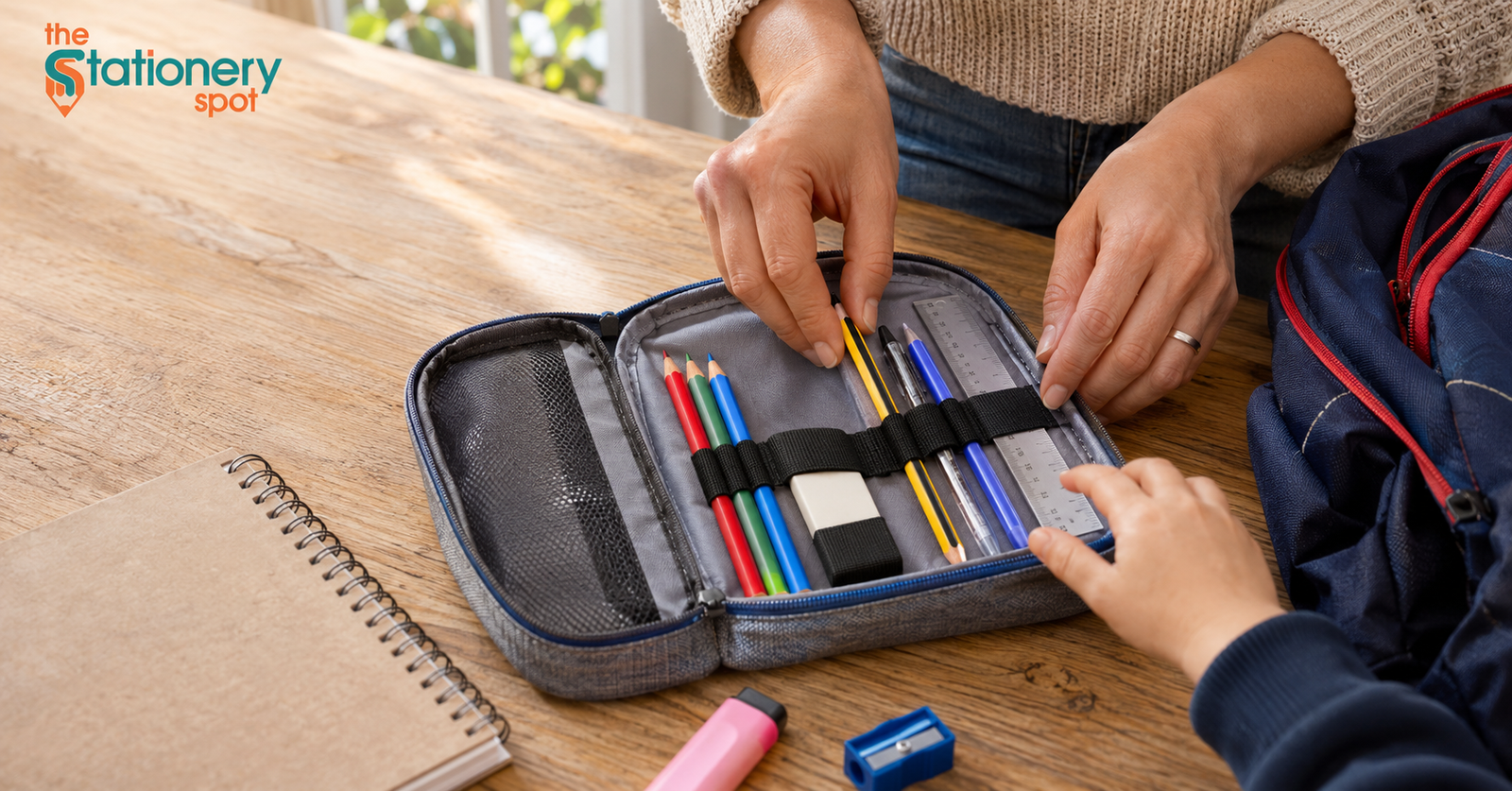
Children often lose pencils, erasers, sharpeners, rulers and other school supplies because they forget where they put them or leave them behind after class. The best way to prevent this is to create simple habits: assign a place for every item, label belongings, check the school bag daily and review supplies weekly.
For Pakistani parents, these small routines can make school mornings less stressful, reduce unnecessary stationery purchases and help children become more responsible for their belongings.
Why Do Children Keep Losing Their School Stationery?
Losing stationery is common among primary and secondary school students. However, it does not always mean a child is careless. Sometimes, children simply have not developed the organisational habits needed to manage their belongings.
Here are some common reasons:
- No fixed storage place: Children put pencils, erasers and rulers wherever there is space instead of returning them to one compartment.
- Sharing supplies: Students sometimes lend stationery to classmates and forget to collect it before leaving.
- Rushing between classes: During short breaks, children may leave items on their desks or inside another classroom.
- Unlabelled belongings: Similar-looking stationery makes it difficult to identify personal items.
- No checking routine: Children pack their bags without checking whether all their supplies are present.
Understanding these reasons helps parents teach better habits instead of repeatedly replacing lost items.
7 Practical Ways to Stop Losing School Stationery
1. Assign a Specific Place for Every Item
One of the easiest ways to teach children organisation is to give every stationery item a permanent place.
For example, assign:
- Main compartment: Pencils, pens and erasers.
- Small compartment: Sharpener and correction tools.
- Side pocket: Ruler and frequently used small items.
- Separate pouch: Colour pencils, markers and art materials.
Explain that every item must return to its assigned place after use. This routine works particularly well for younger children who are still learning to organise their school belongings.
Parents can also use a simple Pencil box guide to understand how different storage compartments can support better organisation.
2. Label School Supplies with Your Child’s Name
Labelling makes it easier to identify personal belongings, especially when several students use similar stationery.
Write your child’s name or initials on:
- Pencils and pens
- Geometry boxes
- Erasers and sharpeners
- Colour pencil sets
- Notebooks and folders
- Water bottles and lunch boxes
For smaller items, use small adhesive labels. For notebooks and books, write the name, class and section on the inside cover.
Choose labels that do not interfere with writing or damage the stationery. Encourage children to recognise their labels so they can identify their belongings quickly.
3. Create a Two-Minute After-Class Checking Habit
Children often lose stationery because they leave classrooms without checking their desks.
Teach them to spend the final two minutes of each class checking their belongings.
A simple checking routine includes:
- Check the desk and surrounding area.
- Collect all pencils, pens and erasers.
- Put stationery back into the correct compartment.
- Check underneath the desk for dropped items.
- Make sure notebooks and folders are inside the school bag.
This habit is especially useful during busy school days when children move between classrooms for science, mathematics, art and other subjects.
4. Teach Children Not to Lend Stationery Without Remembering It
Sharing stationery is normal in Pakistani schools. However, children sometimes lend their favourite pens, pencils or erasers and forget who borrowed them.
Rather than discouraging sharing completely, teach them a simple rule: If you lend something, remember to collect it before leaving the classroom.
Parents can practise this habit at home by asking children to return borrowed items after homework or drawing activities.
For expensive or specialised supplies, encourage children to use them only when needed and avoid carrying unnecessary extras.
5. Organise Subject-Wise Stationery
Some students carry more supplies than they actually need. This becomes particularly noticeable when they move from primary to secondary classes.
Organising stationery according to subjects can make packing easier.
For example:
|
Subject |
Required stationery |
| Mathematics | Pencil, ruler, eraser and geometry tools |
| English | Blue or black pen, pencil and highlighter |
| Science | Pen, pencil, ruler and notebook |
| Art | Colour pencils, markers and drawing materials |
| General use | Sharpener, eraser and extra pen |
For mathematics, parents can also review this geometry box checklist for students in Pakistan to help children keep essential tools together.
6. Make Weekly Stationery Inventory a Family Routine
Daily checking helps prevent immediate losses, while weekly inventory helps parents identify missing or damaged supplies.
Choose a fixed day, such as Saturday or Sunday, depending on your child’s school schedule.
Ask your child to empty the stationery compartments and check:
- Which pencils are still usable?
- Are any pens missing or empty?
- Is the eraser available?
- Is the sharpener working?
- Are rulers and geometry tools complete?
- Are colour pencils and markers in their proper places?
Create a small replacement list instead of purchasing a completely new stationery set every time something goes missing.
This is particularly useful before a new school week, monthly assessments and examination season.
7. Reward Consistency Instead of Punishing Mistakes
Children learn organisational habits through repetition. Losing a pencil should not become a reason for constant arguments.
Instead, appreciate small improvements.
For example:
- Praise your child for returning every item to its place.
- Give a small reward for completing the weekly checklist.
- Let them organise their own stationery.
- Discuss missing items calmly and identify what went wrong.
The goal is to develop responsibility, not make children afraid of losing something.
Daily vs Weekly Stationery Checks: What Should Parents Do?
Both routines are important, but they serve different purposes.
| Daily checking |
Weekly checking |
| Takes around 2–3 minutes | Takes around 10 minutes |
| Checks items after school or before leaving | Reviews the complete stationery collection |
| Identifies recently lost supplies | Identifies damaged or missing items |
| Encourages immediate organisation | Helps plan replacements |
| Suitable for every school day | Best done once a week |
A daily routine prevents small mistakes from becoming regular problems, while weekly checking helps parents manage stationery purchases.
How to Choose a Practical Stationery Organisation System
Parents do not need expensive storage products to keep school supplies organised. A simple system based on the child’s age, school routine and stationery requirements is usually enough.
Consider these factors:
- Age: Younger children benefit from clearly separated compartments, while older students can manage subject-wise pouches.
- Number of supplies: Choose a storage arrangement that accommodates essential items without overcrowding.
- School requirements: Follow the stationery list provided by the school rather than carrying unnecessary supplies.
- Easy identification: Labels and simple colour coding help children recognise their belongings.
Before back-to-school shopping, review your existing school stationery list in Pakistan and compare it with the items your child already owns.
This can prevent duplicate purchases and help families manage their stationery budget in PKR.
Printable School Stationery Checklist for Parents
A checklist makes it easier for children to develop independent checking habits. Print this list or copy it into your child’s school diary.
My School Stationery Checklist
Printable
Student name: ____________________
Class: __________ Week: __________
Daily checklist
0 of 11 tasks completed
0%
Daily tasks
- All pencils and pens are collected
- Eraser and sharpener are in the pencil box
- Ruler and geometry tools are packed
- All borrowed stationery is returned
- Desk and classroom area are checked
- All stationery is back in its assigned place
Weekly tasks
- Missing items have been identified
- Broken or empty supplies are separated
- Colour pencils and markers are checked
- Notebooks and folders are organised
- Replacement items are added to the shopping list
Reset checklist
Parents can ask children to complete the daily section independently and review the weekly section together.
Conclusion
Learning how to stop losing school stationery is about developing consistent habits rather than repeatedly buying replacement supplies. Assigning compartments, labelling belongings, checking desks after class and reviewing stationery every week can make a noticeable difference.
Start with one or two simple routines and gradually encourage your child to manage their own belongings. With regular practice, children can become more organised, responsible and confident about keeping their school supplies safe.
Explore The Stationery Spot for practical School Supplies and School Accessories that help students stay prepared throughout the academic year.
Frequently Asked Questions
How can I stop my child from losing pencils and erasers at school?
Label pencils and erasers with your child’s name and assign them a specific compartment. Encourage your child to check their desk before leaving every classroom and return stationery to its proper place.
How often should parents check their children’s school stationery?
A quick daily check is ideal for identifying missing items, while a complete weekly inventory helps identify damaged or empty supplies. Sunday is a convenient time for many Pakistani families to prepare for the next school week.
What should I do if my child keeps losing school supplies?
Avoid repeatedly blaming your child. Identify when and where items usually go missing, introduce labelled stationery and practise a simple packing routine until it becomes a habit.
How can students organise stationery inside their school bags?
Students should keep frequently used items in an easily accessible compartment and store subject-specific supplies separately. Small pouches and labelled sections can help prevent stationery from getting mixed up.
How can parents reduce stationery expenses in Pakistan?
Check existing supplies before shopping, maintain a weekly inventory and replace only missing or damaged items. Comparing prices and buying essential school supplies during back-to-school sales can also help manage expenses.