

Blogs
How to Hold a Pencil Correctly for Kids? A Parent’s Guide for Ages 3–7

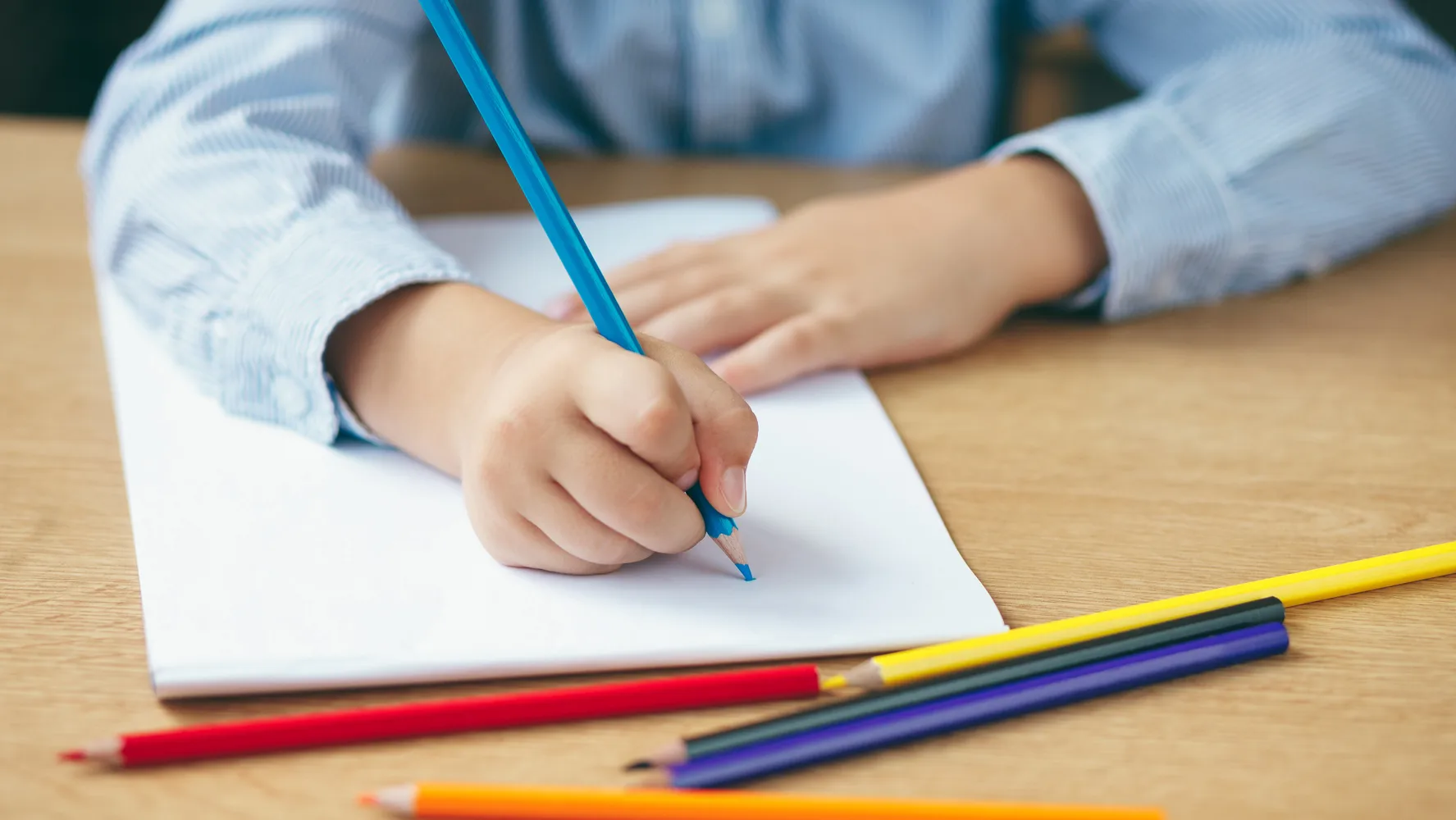
Children usually begin developing a three-finger pencil grip between ages 3 and 5, although comfortable pencil control can take longer. To teach how to hold a pencil correctly for kids, start with short crayons, demonstrate the tripod grip, and practise through drawing and colouring. Avoid forcing a grip before your child is ready.
For parents in Pakistan, pencil grip often becomes a concern when children enter Montessori, nursery, KG, or Class 1. Teachers introduce tracing worksheets, Urdu and English letters, and number writing. Suddenly, something as simple as holding a pencil can become a daily struggle.
The good news is that children learn better when writing feels like play. A few small changes in the tools and activities you use can make practice easier and more enjoyable.
What Age Should a Child Hold a Pencil Correctly?
Pencil grip develops gradually as children gain control over their hands and fingers. A three-year-old and a seven-year-old should not be expected to hold a pencil with the same level of control.
Here is a general guide to pencil grip development.
|
Age |
Typical pencil grip |
What parents can encourage |
| 3 years | Whole-hand or early three-finger grip | Scribbling, colouring, and large shapes |
| 4 years | Static tripod or four-finger grip | Drawing circles, crosses, and simple patterns |
| 5 years | More controlled three- or four-finger grip | Tracing letters, shapes, and numbers |
| 6–7 years | More settled, functional pencil grip | Comfortable handwriting and letter formation |
These are approximate stages, not strict deadlines. NHS children’s occupational therapy guidance describes how children progress from whole-hand movements towards more controlled finger movements.
A child who still uses four fingers at age six may be writing perfectly well. What matters is whether the grip allows comfortable, controlled writing.
How to Hold a Pencil Correctly for Kids: 5 Easy Steps
The tripod grip is a common way to hold a pencil. It uses the thumb, index finger, and middle finger to support and guide the pencil.
You can demonstrate it at home using an ordinary pencil and a sheet of paper.
Step 1: Pinch the pencil gently
Ask your child to pick up the pencil using the thumb and index finger, like picking up a small piece of paper. The fingers should rest a short distance above the sharpened tip.
Step 2: Rest it on the middle finger
Let the pencil rest against the middle finger for support. The thumb and index finger guide it while the middle finger keeps it steady.
Step 3: Tuck the other fingers comfortably
The ring finger and little finger can curl naturally towards the palm. Avoid asking your child to squeeze their fingers tightly together.
Step 4: Keep the hand relaxed
The pencil should lean back towards the hand. Encourage a relaxed wrist and gentle pressure so the child can draw without gripping too tightly.
Step 5: Practise with easy shapes
Start with straight lines, circles, and zigzags. Once your child feels comfortable, introduce letters and numbers. Keep the first sessions around five minutes, adjusting to the child’s interest.
A useful tip is to demonstrate the grip yourself before asking your child to copy it. Children often understand a movement more easily when they can watch it.
Which Pencils and Crayons Help Children Learn the Right Grip?
Parents do not need expensive handwriting kits to teach pencil control. The right tool depends mainly on the child’s age, hand size, and comfort.
| Writing tool | Best suited for |
Main benefit |
| Chunky crayons | Ages 3–4 | Easy for small hands to grasp |
| Short crayons | Ages 3–5 | Encourage fingertip use |
| Triangular pencils | Ages 4–7 | Provide clear resting positions for fingers |
| Standard HB pencils | Ages 5–7 | Suitable for school handwriting practice |
| Pencil grip attachments | Children needing extra guidance | May help position the fingers |
For younger children, crayons are often a better starting point than thin writing pencils. Parents comparing crayons vs color pencils for kids can choose based on the child’s current control rather than appearance alone.
For children starting formal handwriting, an HB pencil is a practical choice. You can also explore pencil grades HB 2B 6B to understand how pencil hardness affects writing and shading.
What Should Pakistani Parents Buy First?
For a child entering nursery or KG, start with chunky or short crayons, a triangular pencil, plain drawing paper, and an eraser. These basics are usually enough for home practice.
Before buying a complete stationery kit, check the school’s requirements. The school stationery list can help parents plan their purchases without collecting unnecessary supplies.
Fun Activities That Improve Pencil Grip Without Writing
Children do not need to complete handwriting worksheets every day to practise finger control.
Try these simple activities at home:
- Playdough shapes: Ask children to roll small balls or make snakes using their fingers.
- Sticker pictures: Let them peel and place stickers on paper.
- Colouring games: Use short crayons to colour simple shapes and animals.
- Tweezer games: Let older preschoolers move large, safe objects between containers using child-friendly tongs.
- Vertical drawing: Tape paper to a wall at a comfortable height and let children draw with crayons.
During Montessori activities or weekend art sessions, offer a beginner colour set for kids with tools appropriate for their age.
The goal is to help children become familiar with controlling small objects through enjoyable activities.
Common Pencil Grip Mistakes Parents Should Avoid
Forcing the tripod grip too early
A three-year-old may still hold a crayon using several fingers or the whole hand. Constantly correcting them can make drawing frustrating. Demonstrate a comfortable grip and allow time for practice.
Choosing pencils that are too long or thin
Young children sometimes find standard pencils difficult to control. Shorter crayons and suitably sized triangular pencils may feel easier during early learning.
Making handwriting practice too long
Repeated tracing worksheets can become tiring, especially after a full school day. A few enjoyable minutes are generally more useful than insisting on finishing a page when the child is uncomfortable.
Focusing only on finger position
A child may hold a pencil in a slightly unusual way and still write comfortably. Research published in the American Journal of Occupational Therapy found that several mature pencil grips supported similar handwriting speed and legibility among the children studied.
Watch how your child writes, whether the letters are becoming clearer, and whether the hand feels comfortable.
When Should Parents Speak to a Teacher or Occupational Therapist?
Children develop handwriting skills at different rates. A different-looking pencil grip alone is not necessarily a reason for concern.
However, speak with your child’s teacher if writing regularly causes frustration, the child struggles to control the pencil, or their hand becomes unusually tired.
If difficulties continue, or writing causes pain, a qualified occupational therapist can assess pencil control and suggest appropriate support. Parents should avoid trying to diagnose a problem from pencil grip alone.
Help Your Child Build Better Pencil Habits
Learning how to hold a pencil correctly for kids takes patience, practice, and age-appropriate stationery. Start with comfortable writing tools, use playful activities, and let your child develop control at a manageable pace.
Explore The Stationery Spot for pencils, crayons, colouring materials, and school essentials that suit your child’s learning stage. Parents preparing for a new school session can also check options for school supplies online with cash on delivery and make back-to-school shopping simpler.